ıCare Family Dental
Professional Teeth Whitening in Chatswood
A lighter smile starts with understanding what is making the teeth look darker. Professional whitening can lighten the colour within natural teeth, but it does not remove tartar or change the colour of fillings, crowns or veneers.
Whether your concern is an overall warmer shade, staining on the surface or one tooth that looks darker than its neighbours, the first step is to identify the difference. A dental assessment can then clarify whether cleaning, professional whitening, treatment for an individual tooth or another option is the better fit.
What can professional teeth whitening change?
Professional whitening uses a bleaching gel to lighten natural tooth structure. It is most relevant when you want to change the overall colour of your natural teeth rather than simply remove deposits from the surface.
It may help with an overall shade that looks warmer or darker than you would like. The response varies, however, because not every type of discolouration behaves in the same way. Your starting shade, the reason for the colour, existing dental work and sensitivity all affect what may be realistic for you.
Scale and Clean, ProphyJet and whitening are not the same treatment
| Option | What it does | What it does not do |
|---|---|---|
| Scale and Clean | Removes plaque and calculus and may remove some surface stain. Its primary purpose is oral health. | It does not chemically lighten the natural colour within the teeth. |
| ProphyJet / air polishing | A cleaning option for surface staining. It uses an air–water–powder stream to remove external stain, plaque and soft deposits and to polish the surface. | It is not whitening: it does not bleach the tooth from within or remove calculus in place of appropriate scaling. |
| Professional whitening | Uses bleaching gel to lighten responsive natural tooth structure. | It does not remove calculus, treat gum disease or change the shade of restorations. |
If surface stain is the main issue, a Scale and Clean or the ProphyJet option may already give you the brighter, fresher appearance you wanted. If the teeth are clean and you still want the natural shade to be lighter, professional whitening is the next question to discuss.
When might whitening not be the right first step?
Whitening should follow an oral-health and suitability check. Treatment may need to be delayed, changed or avoided if there is untreated decay, active gum disease, a cracked tooth, exposed root surfaces, marked existing sensitivity or another condition that needs attention first.
Whitening is generally postponed during pregnancy or breastfeeding. A person with one unusually dark tooth, colour change after dental treatment or discolouration that does not fit a simple surface-stain pattern also needs a diagnosis before choosing a whitening product.
Sometimes cleaning is the only treatment needed. In other situations, the type of discolouration may not respond well to bleaching, or a restorative option may be more appropriate. The purpose of the assessment is to make that distinction before you spend time or money on a treatment that does not match the problem.
Will fillings, crowns or veneers become whiter too?
No. Whitening gel changes the colour of responsive natural tooth structure; it does not lighten tooth-coloured fillings, crowns or veneers.
This matters when a restoration is visible in your smile. If the surrounding natural teeth become lighter, a filling, crown or veneer that matched before treatment may look different afterwards. That does not mean it must automatically be replaced. The dentist should first assess its health, position and appearance, then discuss whether leaving it alone or planning a separate replacement makes sense.
If an existing restoration or a tooth that does not respond to bleaching is your main concern, the conversation may include a non-whitening option such as dental veneers. Any restorative treatment is a separate decision, with its own clinical reasons, risks and fee.
What happens before, during and after whitening?
-
01
Start with the change you want
Read more
A useful consultation starts with what you notice and how light or natural you want the result to feel. An overall warm shade, patchy surface stain and one darker tooth are different starting points.
-
02
Check the teeth, gums and existing dental work
Read more
The dentist checks oral health, sensitivity, visible restorations and the likely source of the colour. If plaque, calculus or surface stain is affecting the appearance, a professional clean may be recommended before deciding whether bleaching is still wanted.
-
03
Choose the appropriate route
Read more
If whitening is suitable, the next decision is the method, product instructions and how to manage sensitivity. An in-chair plan is completed during a clinic appointment; a supervised take-home plan develops over a prescribed course at home. Exact timing depends on the system and the individual plan rather than a universal treatment count.
-
04
Review the colour and how the teeth feel
Read more
The result and any sensitivity can be reviewed after treatment. Existing restorations and future maintenance can then be considered without rushing to make every tooth look identical.
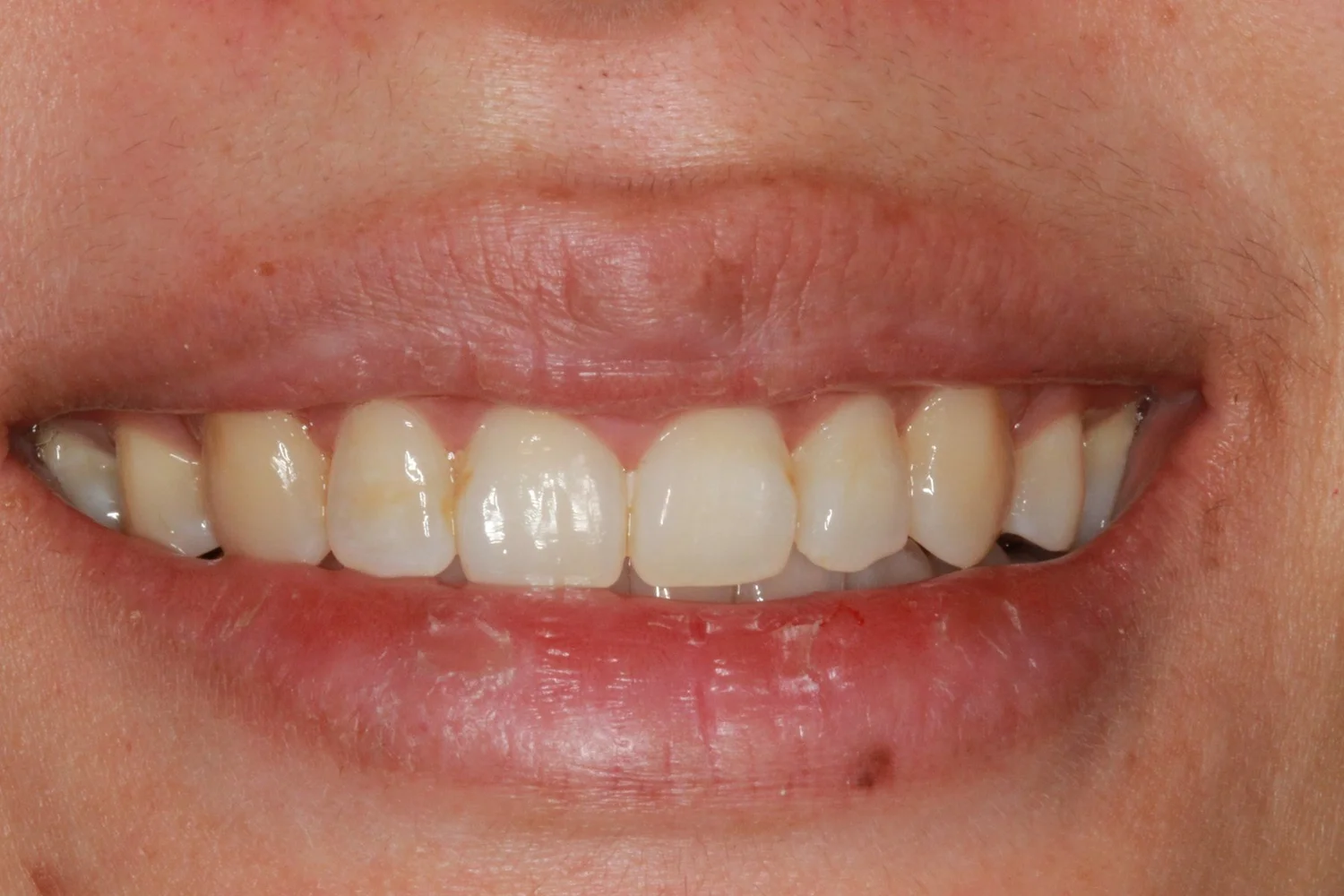
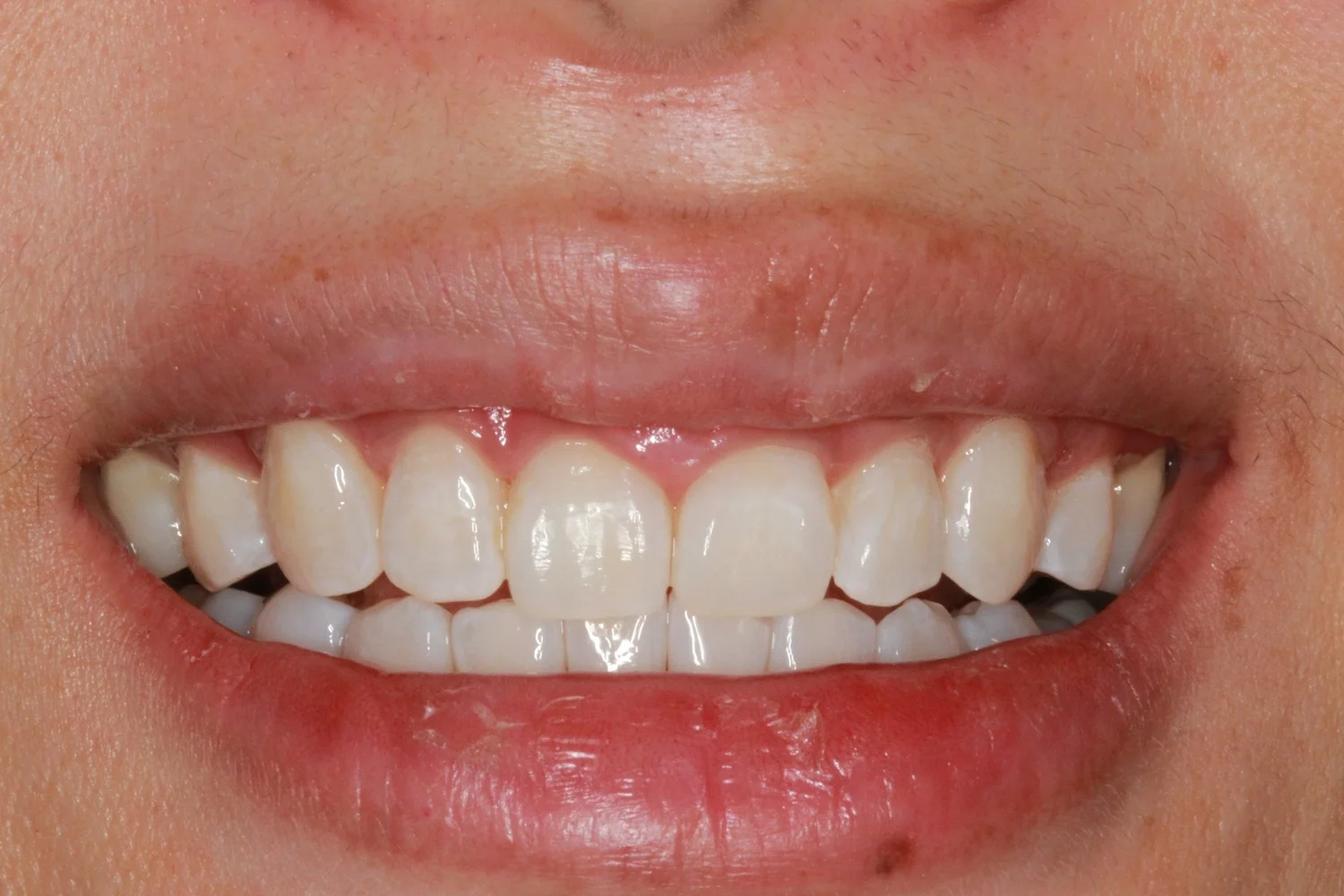
Real case: changing an overall tooth shade
This comparison is intended to show an overall shade concern rather than one isolated dark tooth. The before image shows a naturally warmer overall tooth shade. In the after image, the same smile appears lighter overall while retaining natural variation between teeth.
Sensitivity and comfort
Temporary tooth sensitivity is a common side effect of whitening. The gums or other soft tissues can also become irritated if whitening gel contacts them. For many people these effects settle after treatment, but sensitivity is still important to discuss before you begin.
Get in contact with our dental clinic if pain is severe, does not settle, feels localised to one tooth, or if the gums remain sore. Those symptoms should not simply be covered up by applying more whitening product.
A dentist can take existing sensitivity and exposed areas into account when choosing or adjusting an approach. During a take-home course, changing the wear schedule or product use may be considered, but you should follow individual instructions rather than adjusting the dose yourself.
What affects the result, and how long can it last?
Whitening results vary. The starting shade, type and depth of discolouration, chosen method, product use, sensitivity limits and existing restorations can all affect the visible change. No responsible assessment can promise an exact shade before seeing the teeth.
Whitening is also not permanent. Teeth can gradually pick up new surface stain, and natural colour can change over time. Smoking and repeated exposure to things that stain teeth can affect how the smile looks later, while regular oral hygiene and professional dental care help maintain a clean surface.
Some people consider a professionally guided top-up in the future. Whether that is appropriate, and how often, depends on the original system, the condition of the teeth, the fit of any trays and whether the gel is still suitable to use. Repeated or unsupervised bleaching is not a substitute for review.
The popular idea of a strict short-term “white diet” is not strongly supported by current clinical evidence as a way to improve the whitening result. Follow the instructions for the product you are given, manage sensitivity sensibly and focus on sustainable long-term habits rather than an extreme food list.
Aftercare that is useful
- Brush gently with fluoride toothpaste and keep up your normal interdental cleaning.
- Follow the prescribed amount and timing if you are using take-home gel; do not extend the course on your own.
- If the teeth feel sensitive, avoid the temperature or food triggers that bother you while they settle and follow your dentist's advice.
- Maintain regular dental care so new plaque, calculus and surface stain can be assessed separately from tooth colour.
- Ask before using extra whitening products or an old supply of gel, especially if your teeth, gums or restorations have changed.
- Arrange a review if sensitivity is severe or persistent, one tooth is painful, or the colour change is unexpected.
One dark tooth is a different question
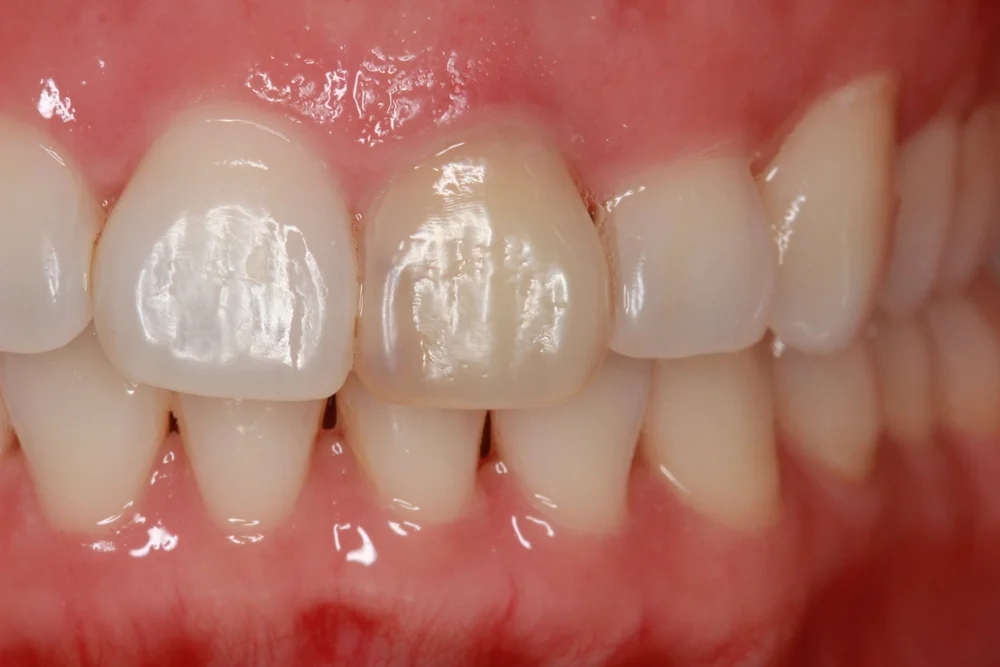
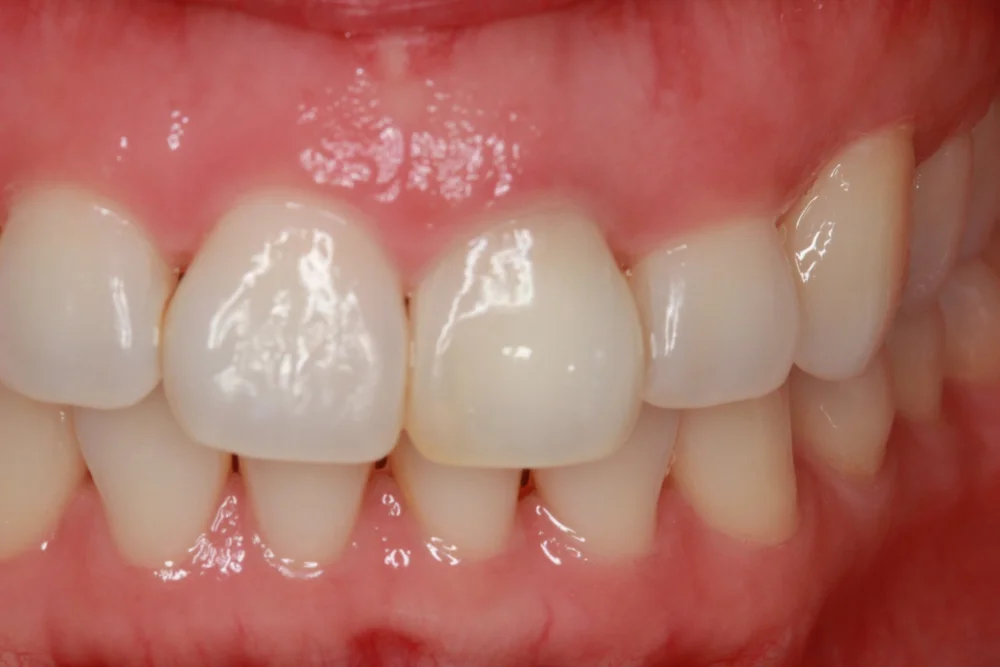
A single tooth that looks much darker than its neighbours needs a diagnosis, not simply stronger whitening across the whole smile. The appearance alone cannot tell us whether the difference comes from the tooth's internal history, decay, an old restoration, a crack, previous trauma or another cause. A photograph cannot establish any of those explanations.
If a tooth has already had root canal treatment and is otherwise suitable, internal bleaching may be considered. This approach places bleaching material inside the tooth rather than using a tray or gel over the whole smile. It is a distinct dental procedure with its own assessment, risks, review needs and alternatives.
External full-smile whitening may still be relevant for the neighbouring natural teeth, but it should not be used to avoid diagnosing the darker tooth. The sequence matters when the aim is to bring one tooth closer to the surrounding shade.
Supporting case: internal bleaching for one darker tooth
This case used internal bleaching over a treatment period of approximately seven to fourteen days. The before image shows one upper front tooth darker than its neighbours; after treatment, the same tooth appears closer in shade to the surrounding teeth.
What affects the cost of professional whitening?
There is no useful single fee that applies to every whitening plan. Cost can be affected by:
- the assessment and diagnostic records required;
- whether professional cleaning or treatment of an oral-health problem is needed first;
- an in-chair, supervised take-home or other clinically appropriate pathway;
- the product, trays and gel involved;
- reviews, replacement supplies or future top-ups;
- whether a visible restoration or one darker tooth needs a separate plan.
Ask what the quoted fee includes before proceeding. A fee for full-smile whitening does not include a clean, replacement fillings, internal bleaching, extra gel, future top-ups or other treatment.
You can also contact and visit iCare at Shop 3, 379 Victoria Avenue, Chatswood NSW 2067, on the Archer Street side. The clinic is about a seven-minute walk from Chatswood Station, and two hours of free parking is available at Chatswood Chase.
A clearer whitening consultation in Chatswood
The most useful first question is not “How white can you make my teeth?” It is “What is making my teeth look this way, and which change would suit me?” That distinction helps avoid unnecessary treatment and makes room for a result that still looks like your own smile.
iCare Family Dental is in Chatswood and welcomes patients from Sydney North Shore and other areas. Consultations are available in English, Mandarin and Cantonese.