ıCare Family Dental
Black Triangle Teeth Treatment in Chatswood
Black triangles are dark spaces near the gumline where the small triangle of gum between neighbouring teeth does not completely fill the area below their contact. They can have more than one cause and may become easier to see after Invisalign treatment or other orthodontic alignment has moved crowded or overlapping teeth.
The best place to start is an assessment of why the space is there and which option fits your teeth, gums and goals.
Understanding the space
What is a black triangle, and why can it appear after alignment?
A black triangle is the space below the contact between two teeth when the small peak of gum does not fill the area completely. The darkness of the mouth behind the teeth makes the space look black.
It is an appearance, not a diagnosis. Some people are mainly concerned about how it looks; others notice food catching or difficulty cleaning the area. Contributing factors can include:
Contributing factors
- teeth that taper towards the gumline;
- the position, angle or contact of neighbouring teeth;
- gum recession or reduced bone support;
- a space becoming visible after crowded or overlapping teeth are aligned; and
- an existing filling, bonding or wider tooth-structure problem.
Why timing is not the diagnosis
Alignment can reveal tooth shape and spaces that were hidden while teeth overlapped. The timing alone does not show that Invisalign caused the black triangle or that gum damage occurred. An examination helps identify whether the main issue is tooth contour, tooth position, gum health or a combination.
Gum health first
Will the gum grow back and fill the space?
The appearance may change as tissues settle or inflammation is treated, but a missing peak of gum does not reliably grow back by itself—particularly if gum attachment or supporting bone has been lost. Waiting alone is therefore not a predictable treatment.
If the gums are inflamed, bleeding or receding, improving gum health may be the priority. If tooth position or root angle is the main issue, further tooth movement may make more sense. Composite restoration addresses the tooth side of the space by changing the contact shape; it does not regenerate gum or bone.
Direct composite technique
How composite closure works—and when it may suit
Composite closure uses tooth-coloured resin to reshape the side of a tooth and extend the contact towards the gumline. A clear, shaped matrix can guide the material; the Bioclear Black Triangle Matrix System is one option used at iCare. The choice of technique depends on the individual case, with the aim of reducing the dark opening while keeping tooth proportions balanced and the area cleanable.
Composite closure may be considered when the gums are healthy and stable, tooth shape or contact contributes to the space, and the planned contour can look balanced and be cleaned. The assessment may include gum and bone support, tooth and root position, tooth proportions, bite, existing fillings or bonding, and cleaning access.
When another step may come first
Another step may come first when:
- gum care is needed: bleeding, swelling, active gum disease or ongoing recession should be assessed before cosmetic closure;
- tooth position is the main issue: further movement, sometimes after gently reshaping a very small amount between the teeth so they can sit closer together, may create a better contact;
- a tooth needs other restorative care: decay, a failing restoration, a crack or wear can change the treatment plan; or
- the goal is broader than one contact: if you want to change the colour, shape or surfaces of several teeth, veneers may be part of a different discussion rather than the automatic answer to a localised black triangle.
Planning aligners, retainers and whitening
Two planning details are worth raising early:
- Aligners and retainers: added composite changes tooth contour, so bring your current appliance. Its timing and fit need to be checked.
- Whitening: if whitening is part of your plan, discuss it before the composite shade is selected. Whitening changes natural tooth colour but does not lighten existing composite in the same way.
One iCare case
One iCare case: a staged approach to the final detail
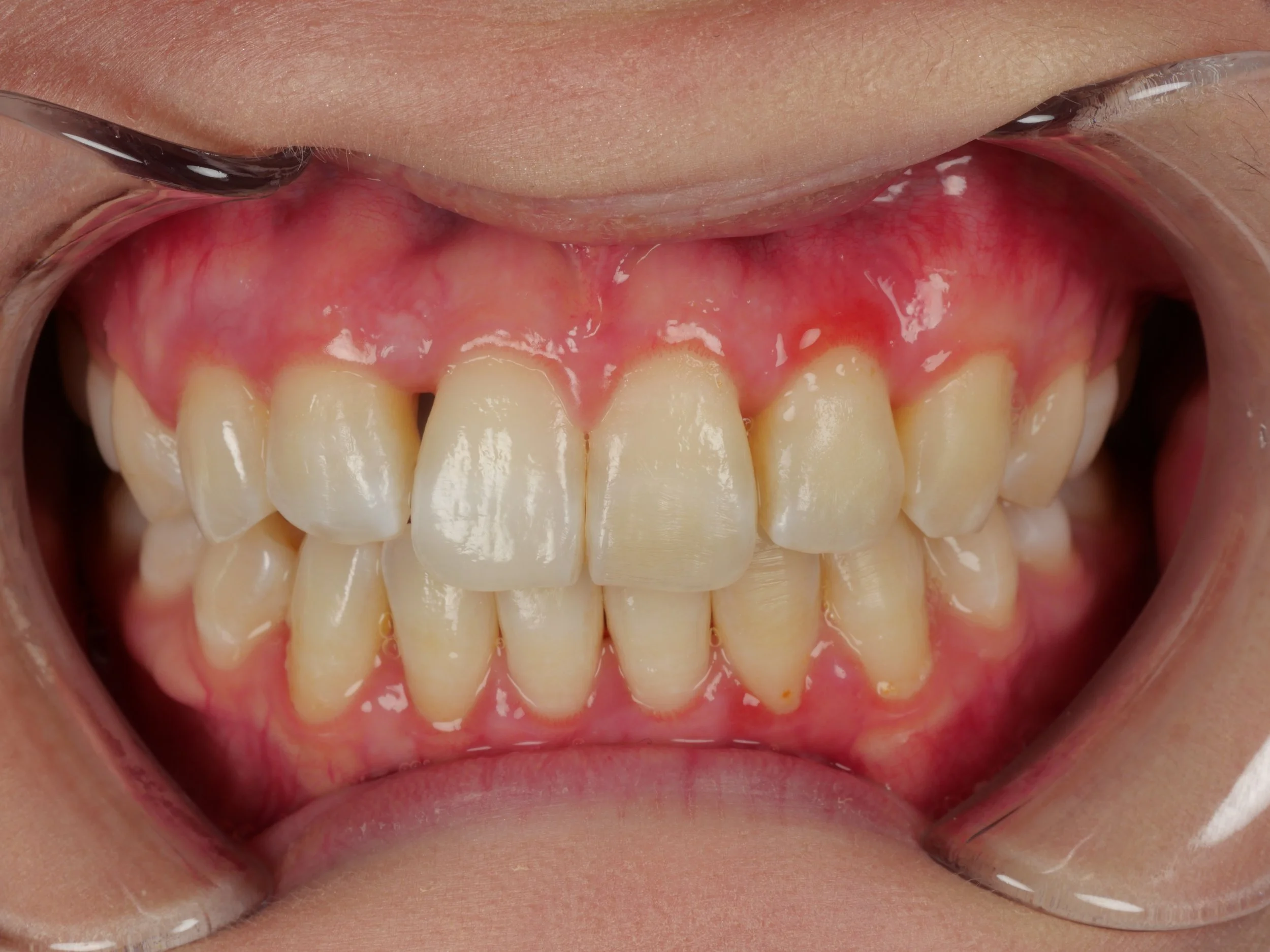
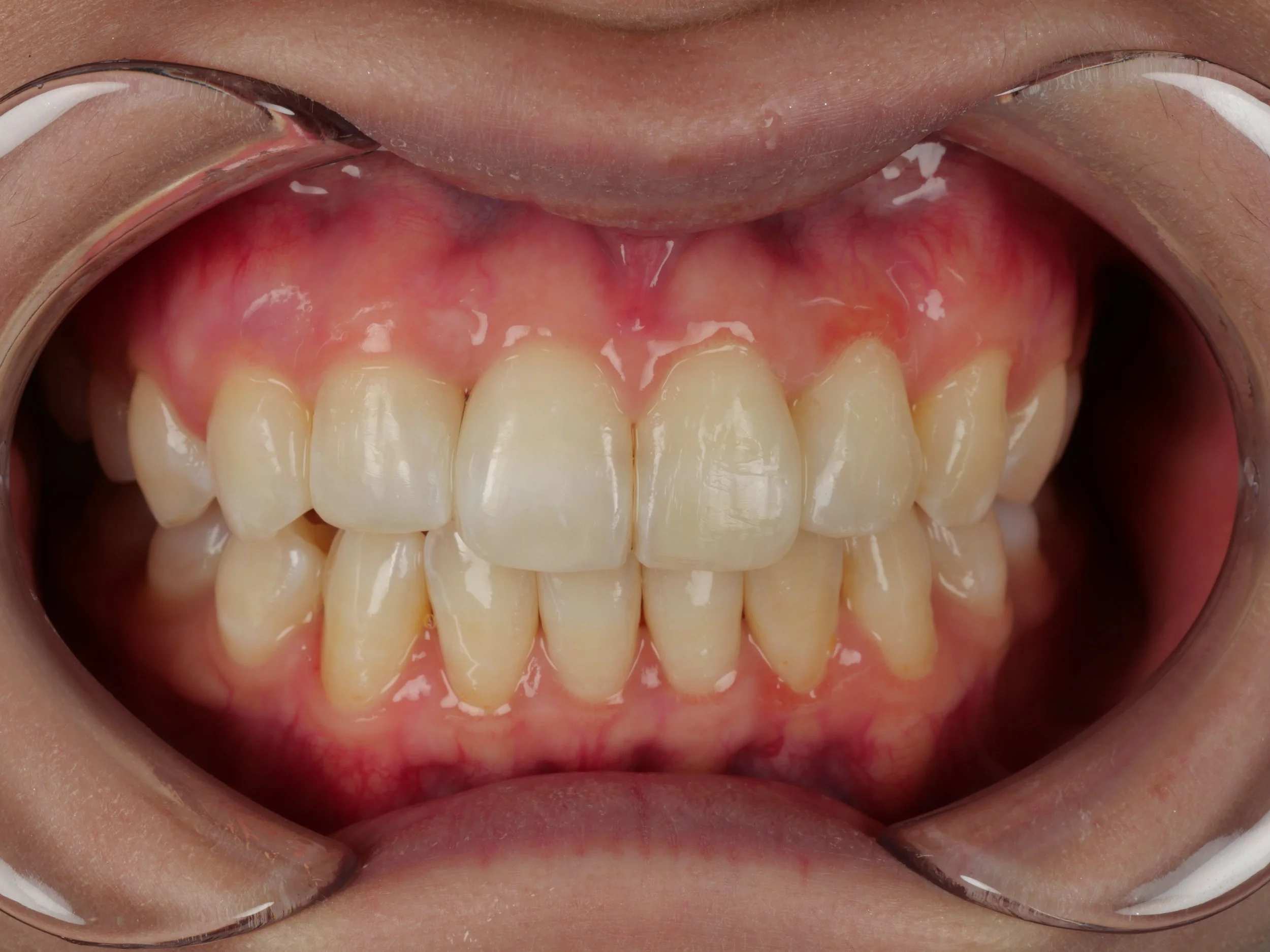
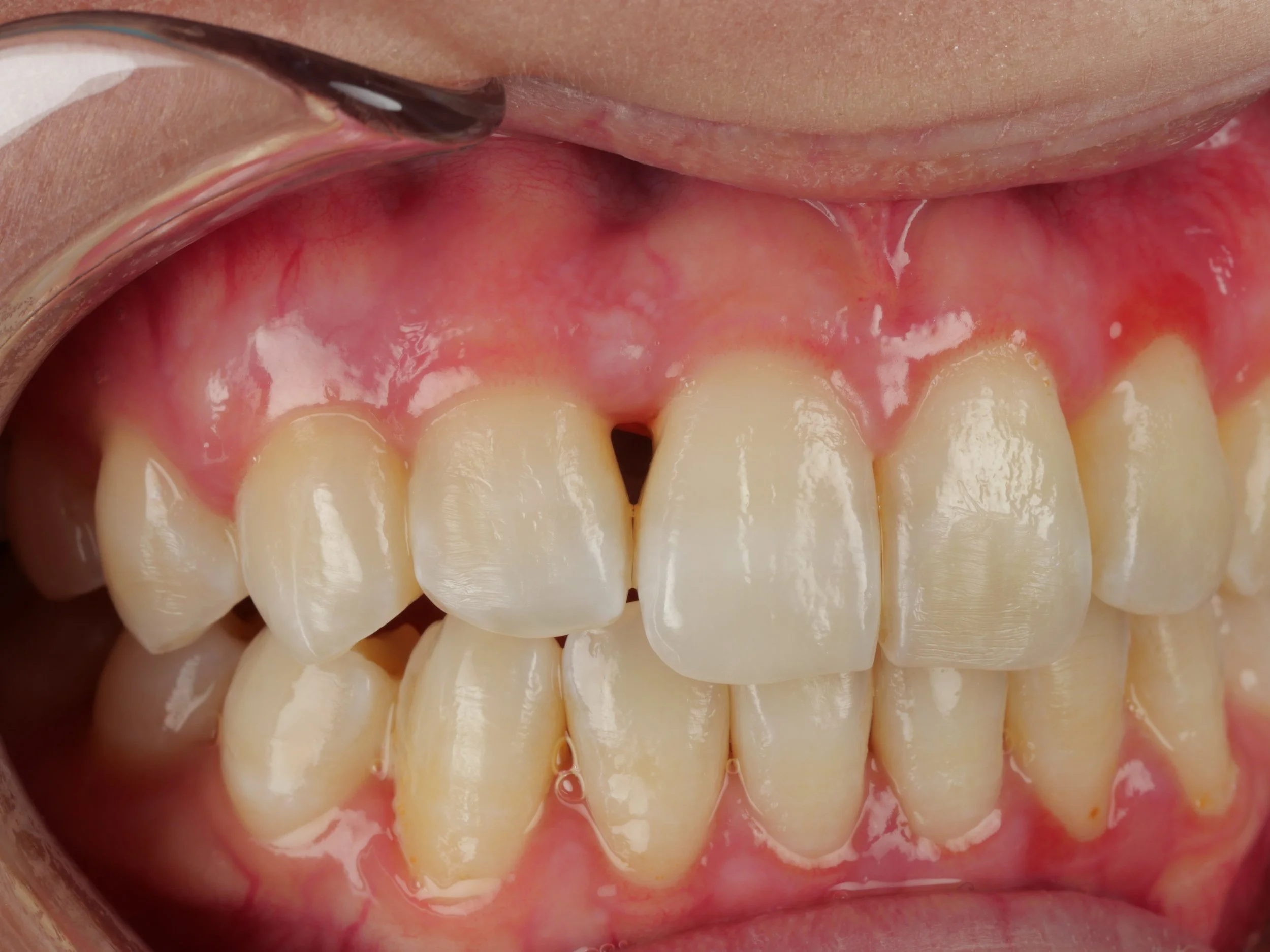
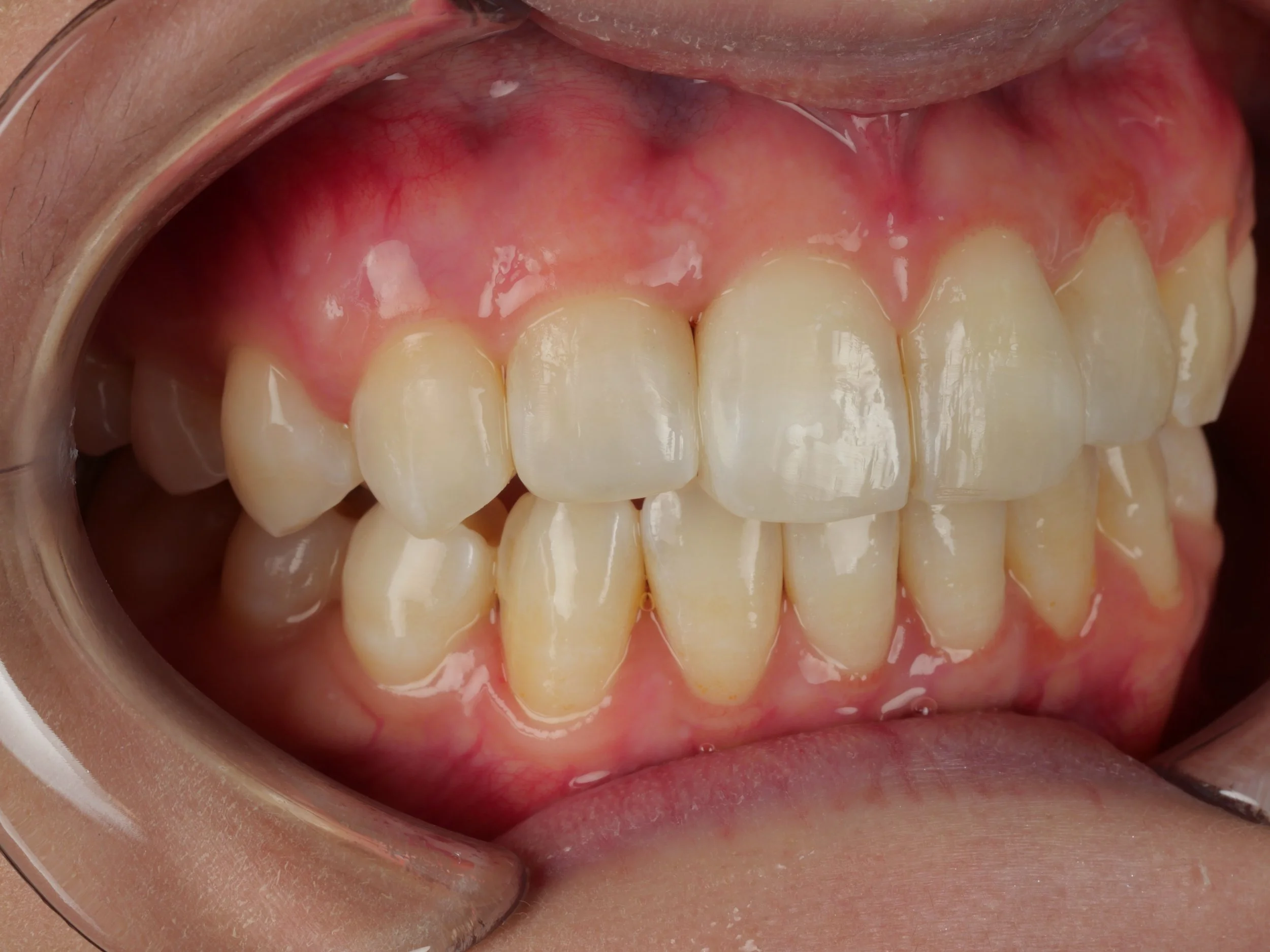
This patient completed a staged smile treatment at iCare. iCare completed the Invisalign, teeth whitening and Bioclear stages. Invisalign first moved and aligned the teeth. Once the teeth were aligned, a black triangle between the upper front teeth became more noticeable. Teeth whitening was completed next, followed by Bioclear composite closure as the final stage.
For the black-triangle stage, composite reshaped the contact area towards the gumline. The after photographs were taken at a two-day review and show the visible dark space closed at that early review. Whitening was a separate stage, so the colour change should not be attributed to Bioclear.
This is one patient’s result; treatment needs and outcomes vary.
View supporting close-up photographs
A typical outline
What happens if composite closure is suitable?
The outline below is typical; the exact records, preparation, appointment number and comfort options depend on the individual plan.
Understand the cause
Your dentist discusses the space and what you would like to change, then assesses the gums, tooth shape and contact, existing restorations, bite and cleaning access. Records or imaging may be recommended when needed to understand the supporting tissues.
Agree on the sequence
Any gum care, further tooth movement or other restorative work that should happen first is discussed before the contact is changed.
Place and shape the composite
If composite closure is selected, the teeth are normally cleaned and isolated, and the tooth surface is prepared for adhesive bonding. Your dentist selects a suitable placement technique for the case, then shapes and polishes the new contact.
Check and review
The dentist checks the contact, bite, gumline and whether floss passes through the area. A review may check the gum response, margins, colour, polish and cleaning technique.
Daily care and review
How do I clean and maintain the restored contact?
The new contact still needs daily cleaning. Depending on its shape and your gum health, this may be with floss, an appropriately sized brush for cleaning between the teeth, or another method shown by your dental team. Do not force a brush that is too large.
If floss repeatedly catches or shreds, the area stays swollen, or the gum bleeds, arrange a review rather than avoiding the contact. Continue regular brushing with fluoride toothpaste and dental reviews based on your individual needs.
Over time, composite may lose some gloss, develop surface or edge staining, wear, chip or partly come away from the tooth. A small change may sometimes be polished or repaired; more extensive damage may require replacement after assessment. Changes in tooth position or gum level can also affect how the area looks later.
Individual scope
What affects the cost of black triangle treatment?
Fees vary with the individual treatment scope. Factors can include:
- the number, size and location of the black triangles;
- how many tooth surfaces need contouring;
- the contact design and complexity of keeping the result natural and cleanable;
- gum health, bite, tooth condition and existing restorations; and
- whether gum, orthodontic or other restorative care should come first.
After assessment, iCare can confirm the recommended scope and current fee.
Chatswood, Sydney’s North Shore
Why start with iCare in Chatswood?
We start by understanding the cause of the space and your priorities. Gum health, tooth position and existing restorations are considered before deciding whether composite closure, another approach or a staged plan makes sense.
We welcome patients from Chatswood, Sydney’s North Shore and elsewhere. Consultations are available in English, Mandarin and Cantonese.
Book a black-triangle consultation
Use the button below and select the general Consultation appointment type. The online system does not have a treatment-notes field, so tell the team when you arrive that you would like a black triangle assessed. You can also call (02) 8068 6828.