ıCare Family Dental
Composite bonding in Chatswood for small front-tooth changes
Composite bonding uses tooth-coloured resin to make a focused addition to part of a tooth. It may be considered for a small chip, a worn or uneven front-tooth edge, a limited gap, or a local change to shape, length or proportion.
A dentist needs to check whether the addition will suit the tooth, the way your teeth meet and the wider smile. Bonding changes contour; it does not move teeth or correct an underlying bite.
At iCare Family Dental in Chatswood, a consultation gives you time to show us what you would like to change and understand whether bonding or another option may be appropriate.
Understanding the material
What is composite bonding?
Composite bonding — also called dental bonding or tooth bonding — uses a tooth-coloured resin material that is bonded directly to the tooth, shaped and polished. Unlike a restoration made outside the mouth, our dentists at iCare build the selected area directly on the tooth.
The same resin family is also used for fillings and composite veneers, but those treatments answer different problems and may involve a different extent of the tooth.
When adding material may not be the right answer
Adding material is not automatically the right answer. A tooth may need a different approach if there is active decay, a crack, an old restoration, substantial loss of structure, gum disease, an uncomfortable bite or ongoing wear. A new chip, pain or sensitivity should be assessed before it is treated as an appearance-only concern.
For a small gap, our dentists at iCare also need to consider the resulting tooth width. If the main issue is tooth position, crowding, a larger space or the bite, moving the teeth may make more sense than making them wider with resin. A triangular space beside the gumline — often called a black triangle — is a separate concern.
One individual result
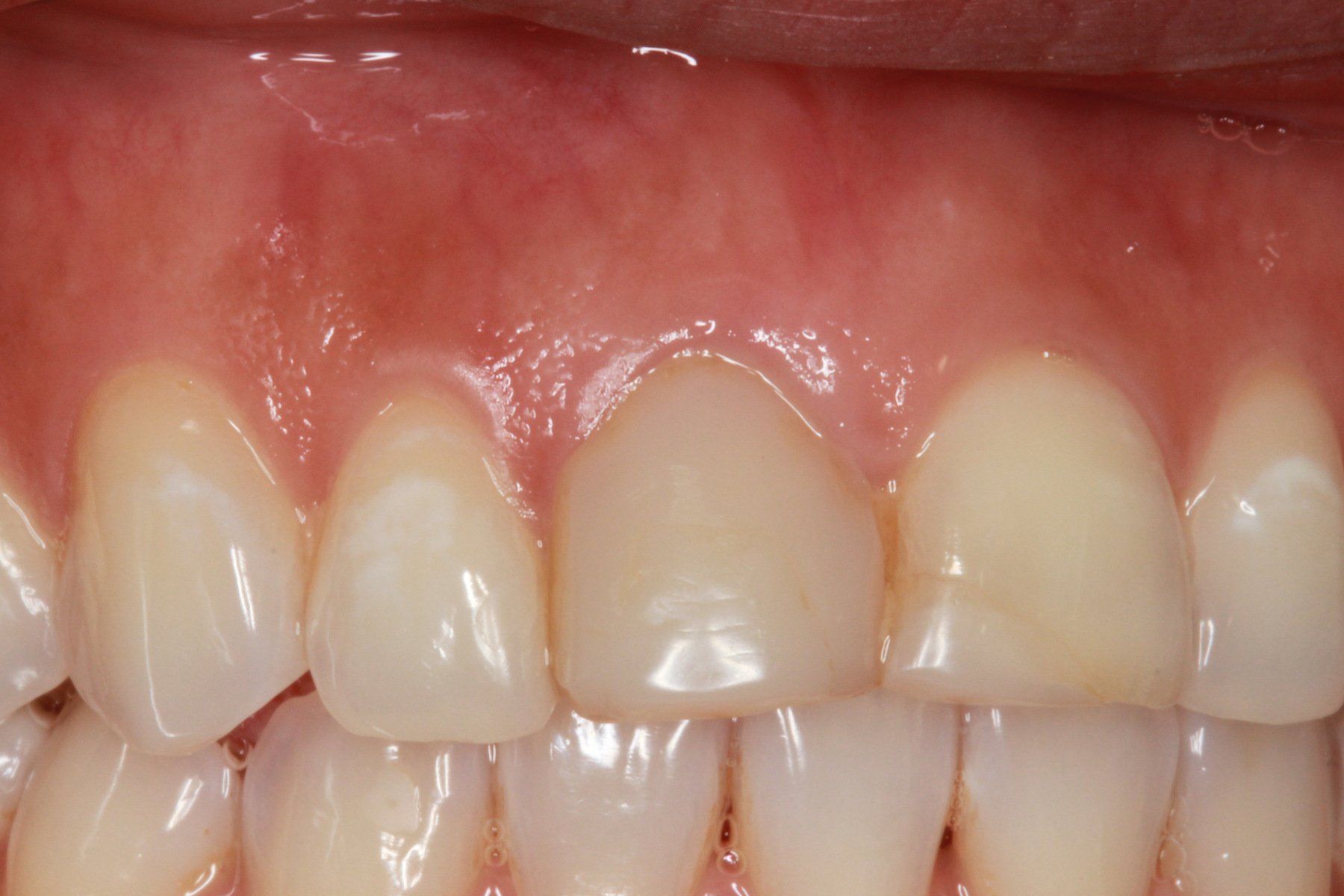
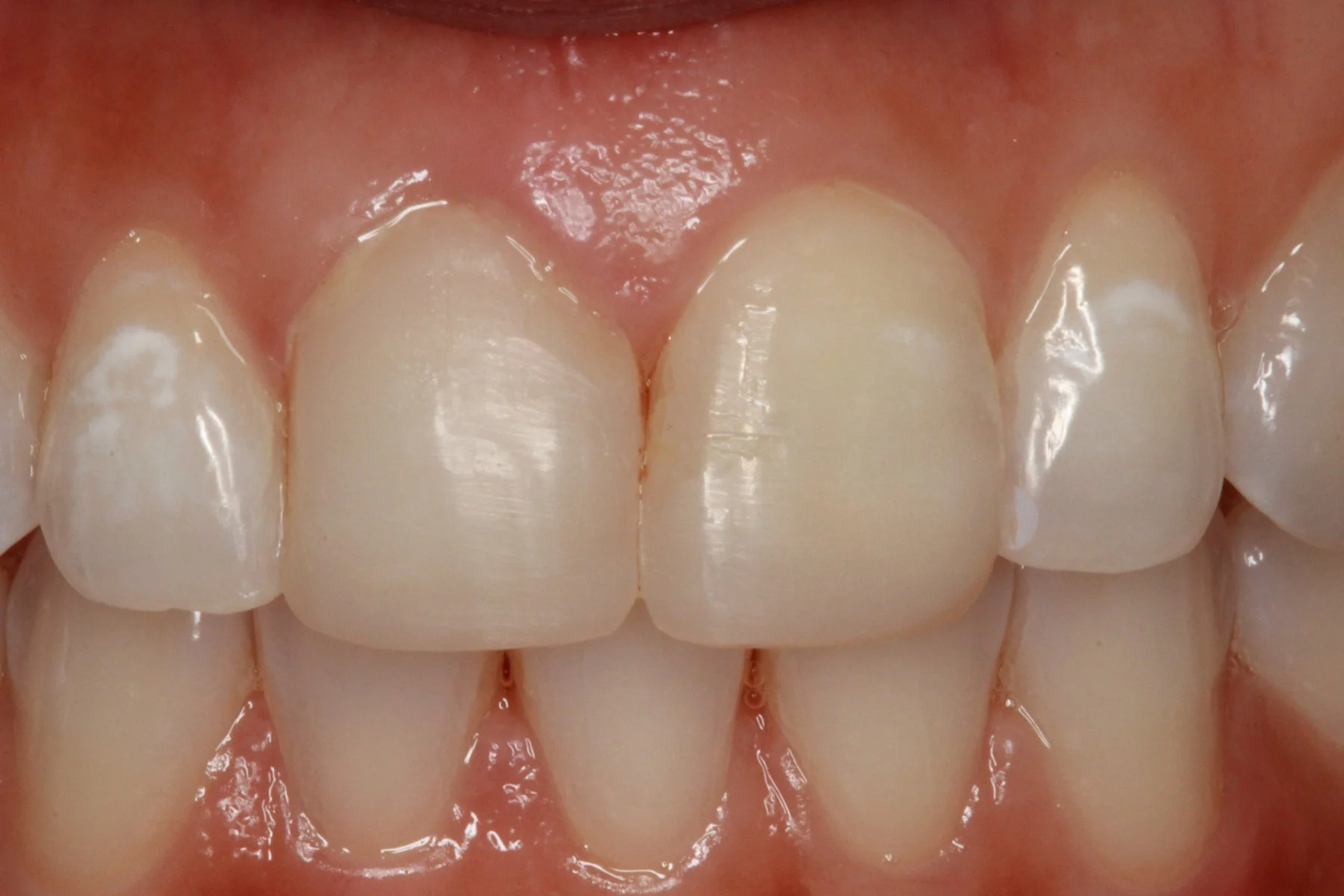
A real iCare direct composite build-up case
This real iCare case shows the upper front teeth before the documented build-up and after the final direct composite build-up. The treatment plan and result are individual to this patient.
Start with the change you notice
What happens at a composite bonding assessment?
The assessment starts with the change you want to understand. A dentist may then consider:
- the condition of the tooth, enamel and any existing restoration;
- the teeth and gums around it;
- how the upper and lower teeth meet and where forces fall;
- the reason for a chip, worn edge or space;
- how an addition would affect width, length and proportion;
- colour and shade matching; and
- whether bonding, monitoring or another treatment would better fit the problem.
A general direct process
What does the general bonding process involve?
The exact steps depend on the tooth and plan, but direct composite work commonly involves:
- 01
Agreeing on the area, shape and shade
Read more
Our dentists at iCare confirm what is being changed and select a composite shade in the context of the surrounding teeth. The aim is to plan a proportion that belongs with your smile rather than simply adding as much material as possible.
- 02
Preparing and isolating the surface
Read more
The area is kept clean and dry. The tooth surface is conditioned so the material can bond, and any local smoothing or preparation should be explained before treatment.
- 03
Placing and curing the composite
Read more
The resin is applied and shaped directly on the tooth. A curing light hardens the material as the planned form is built.
- 04
Finishing, polishing and checking the bite
Read more
Our dentists at iCare refine the contours and surface, polish the composite and check how the treated area meets the opposing teeth. Further adjustment or review may be recommended if the bite or surface needs refinement.
Preparation depends on the tooth
Will tooth structure need to be removed?
In some suitable cases, composite bonding is mainly additive and may need only surface conditioning. An assessment is still needed to determine whether any smoothing, drilling or enamel removal is required.
What else could assessment find?
Some teeth need a small amount of smoothing or preparation. If assessment finds decay, damaged tooth structure or an unsuitable old restoration that needs removal, a filling or another restorative pathway may be more appropriate. A tooth that needs more extensive treatment may instead need a veneer, crown or another option.
Your dentist should explain what is proposed for your tooth before treatment. Whether a bonded restoration can later be changed or removed depends on the tooth, the preparation and any existing restoration; it still needs clinical care.
Practical questions
Comfort, local anaesthetic and number of visits
Does composite bonding hurt?
Comfort varies with the tooth and the work required. Our dentists at iCare will explain what sensations to expect and whether local anaesthetic is recommended for the specific tooth and plan. Let the team know before treatment if the tooth is sensitive or you feel anxious.
Is it always completed in one appointment?
Some straightforward direct composite work can be completed in one treatment visit after assessment, but not every case follows that sequence. Separate planning, whitening, several teeth, more detailed shaping, another dental need, or a later review and adjustment can mean more than one visit.
Our dentists at iCare can give you a more useful timing estimate after examining the teeth and agreeing on the scope.
Match the option to the problem
Composite bonding or another option?
The material name is not enough to choose a treatment. The main problem, the part of the tooth involved and the desired change determine which conversation is most useful.
| If the main concern is… | The relevant route may be… | Key difference |
|---|---|---|
| A small local change to a front-tooth edge, length, shape or proportion | Composite bonding | Resin is added to a selected area to change contour. |
| Decay, an old restoration or local damage where restoring tooth structure and function is the main goal | Dental filling assessment | A filling treats a defect or missing tooth structure; it is not defined by an elective shape change. |
| A broader change across the visible surface, colour or shape of selected front teeth | Porcelain or composite veneers | A composite veneer may use a similar resin, but it covers a broader part of the visible tooth surface. |
| A triangular space beside the gumline | Assessment for a black triangle | Treatment focuses on the space beside the gumline. The technique and matrix system are selected for the individual case rather than using one system for every patient. |
| A tooth that may need broader or whole-tooth coverage | Dental crown assessment | A crown covers the tooth more extensively when greater restoration or protection is being considered. |
| Teeth that need to change position, or concerns involving crowding, rotation, spacing or bite | Moving teeth with Invisalign | Invisalign moves teeth over time; bonding adds material and does not move teeth. |
No option is automatically better. The most suitable plan may be bonding, tooth movement, another restoration or no elective treatment. The assessment should match the treatment to the problem rather than make the problem fit one product.
Shade planning matters
Should whitening come before composite bonding?
Natural teeth can lighten with whitening, but existing composite, fillings, crowns and veneers do not whiten in the same way. If you are considering both professional teeth whitening and new composite bonding, tell our dentists at iCare before the final shade is selected.
When both treatments are appropriate, whitening is commonly planned before final shade matching and bonding. Your dentist will set the sequence and any interval for your teeth; there is no universal timetable to promise. Whitening natural teeth after bonding may leave the composite looking different in colour, so the bonded area may then need reassessment.
Maintenance over time
Can composite stain, chip or be repaired?
Composite can change over time. Its surface may lose polish or pick up stains, and an edge may wear or chip. The way the teeth meet, the size and position of the addition, habits such as biting hard objects, ongoing clenching or grinding, and home care can all affect maintenance.
If the tooth and remaining restoration are sound, repolishing or a local repair may sometimes be possible. In other cases, replacement or a different treatment may be more appropriate. A repair cannot be promised until our dentists at iCare have checked what happened and the tooth beneath it.
Contact our clinic if a bonded edge feels rough or sharp, a piece breaks, the tooth becomes sensitive, or your bite feels different.
Looking after bonded front teeth
- Brush with fluoride toothpaste and clean between the teeth as advised.
- Keep dental reviews at the interval recommended for your oral health and the restoration.
- Avoid using bonded teeth to bite fingernails, pens, ice, packaging or other hard objects.
- If you clench or grind, ask whether that changes the treatment or maintenance plan.
- Strongly coloured foods and drinks, and smoking, can contribute to surface staining. Cleaning or polishing may help some surface changes, but it cannot correct every colour difference.
Planning the fee
What affects the cost of composite bonding?
The main factors are the size of the composite addition and how much refinement and polishing are needed to achieve the planned shape and finish.
Before deciding, ask what the proposed fee includes, whether another treatment would be quoted separately and what alternatives are available.
A conversation shaped around you
Why discuss composite bonding with iCare?
The conversation will begin with the change you want, then test whether a focused addition is enough. iCare's wider treatment approach is to preserve natural tooth structure where clinically appropriate and aim for a result that fits the individual smile rather than a standardised template.
Consultations are available in English, Mandarin and Cantonese. iCare Family Dental is in Chatswood on Sydney's North Shore, at Shop 3, 379 Victoria Avenue, Chatswood NSW 2067, with the entrance on the Archer Street side. There is two hours free parking at Chatswood Chase, and the clinic is about a seven-minute walk from Chatswood Station. Plan your visit to our Chatswood clinic.
iCare has received 200+ five-star Google reviews from patients.
A clear next step. Ready to understand the options for your front teeth?
Tell us what you would like to change. A consultation at iCare Family Dental in Chatswood can clarify whether a focused composite addition, another option or no treatment is the more suitable next step. To arrange this, book online and select the general Consultation appointment.