ıCare Family Dental
Veneers in Chatswood, designed for a naturally balanced smile
Veneers can change the visible colour, shape and proportion of selected front teeth. The key question is whether they are right for your teeth and goals.
What are dental veneers?
A veneer is a thin restoration bonded to the front of a tooth to change visible colour, surface, outline, length or proportion. It may be used on one tooth or selected teeth.
Porcelain veneers are custom-made ceramic restorations. Composite veneers use tooth-coloured resin shaped and polished by the dentist. They involve different processes, maintenance needs and costs.
Veneers change the surface appearance of teeth; they do not move teeth or correct an underlying bite. Tooth decay, gum disease and other oral-health concerns also need to be assessed before elective cosmetic treatment begins.
Porcelain or composite veneers: understanding the difference
Neither option is automatically better. The useful comparison is how each material fits your teeth, priorities and maintenance expectations.
| Porcelain veneers | Composite veneers | |
|---|---|---|
| How they are made | Custom ceramic restorations are made to the agreed design and bonded to the teeth. | Resin is applied, shaped and polished by the dentist, often directly on the teeth. |
| Process | Usually staged through records, a trial design, preparation and temporaries where required, laboratory creation, fitting and review. | Often involves fewer treatment stages, although the number of visits still depends on the treatment scope and design. |
| Appearance and ageing | Ceramic can reproduce layers, translucency and texture and generally resists surface staining better. | Composite can look natural and is easier to add to, polish or repair, but may stain, roughen or wear. |
| Preparation and repair | Preparation is case-dependent; fracture may require replacement, while some loose veneers can be rebonded. | May sometimes need little preparation; localised wear or chipping can often be repaired. |
| Cost | Laboratory work and staged treatment usually mean a higher initial fee. | The initial fee is generally lower, with future maintenance still relevant. |
Could veneers suit what you want to change?
Veneers may be considered for visible concerns such as:
- colour that has not changed as hoped with whitening;
- small spaces, chips, wear or irregular edges;
- teeth that look narrow, short or uneven in proportion; or
- an uneven appearance across existing front-tooth restorations.
Suitability depends on the cause of the appearance, tooth and gum health, available enamel, existing restorations, tooth position, bite and any clenching or grinding.
When another option may make more sense
A consultation should leave room for a simpler option—or no treatment—when that better fits the concern.
- Whitening may suit a colour-only concern when shape and position are acceptable. It does not whiten existing veneers, crowns or composite restorations.
- Direct bonding may suit a small chip, local shape change or limited space.
- Orthodontic treatment, including clear aligner treatment, moves teeth and may be more appropriate for position, crowding or bite concerns.
- Bioclear composite treatment may suit some black triangles or specific spaces; that concern needs its own assessment.
- A crown may be discussed when a tooth needs more structural coverage than a veneer provides.
- No treatment is a valid choice when the concern is aesthetic and you are comfortable leaving the teeth as they are.
How iCare plans a smile that still looks like you
Start with your goals, not a template
We begin by asking what you notice, what you want to keep and what you do not want the result to become. The dentist then translates those preferences into a design that can be assessed clinically.
A natural-looking smile is not created by repeating one white shade and one tooth shape. It depends on how the teeth relate to one another and to the person wearing them.
Look at the whole smile
iCare uses multi-angle photographs to study length, width, shape, colour, translucency and overall smile proportion. These details work together: a tooth may look out of place if its width, edge position or brightness does not sit comfortably beside its neighbours.
Colour is more than a shade label. Natural teeth have variation, depth and translucency, while surface form and texture affect how light moves across them. These features should help the veneers belong within the wider smile rather than look like an identical row.
Turn the design into clear laboratory communication
For porcelain veneers, iCare gives the dental technician photographs and specific design feedback. We select a technician able to work to the case requirements for colour, layering, translucency and form. The trial and temporary stages provide further information before the final ceramic is completed.
REAL ICARE RESULT
A closer look at veneer planning and the visible result
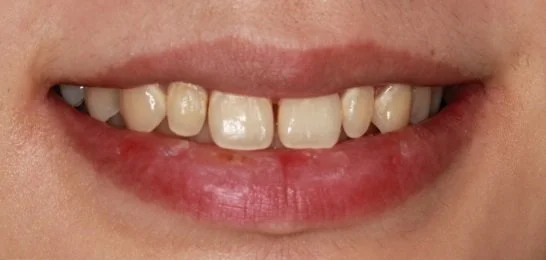
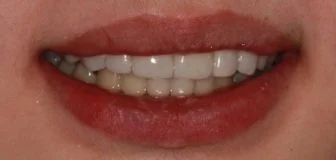
This patient was concerned about visible spaces and the uneven colour and texture of previously restored front teeth.
This case involved veneers on the upper front teeth only. No veneers were placed on the lower teeth.
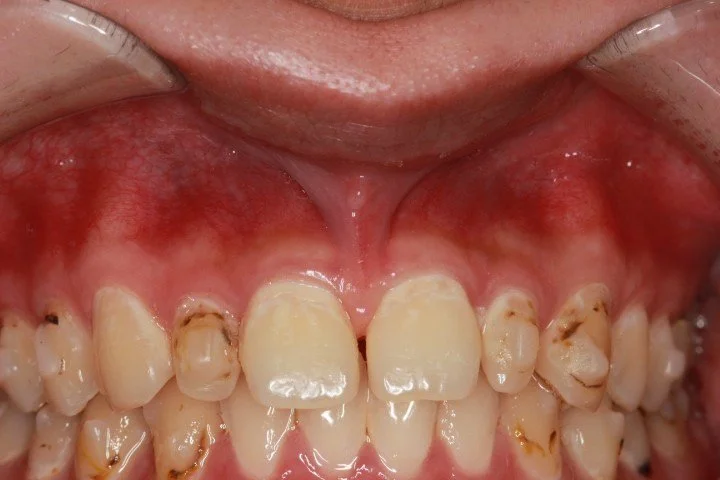
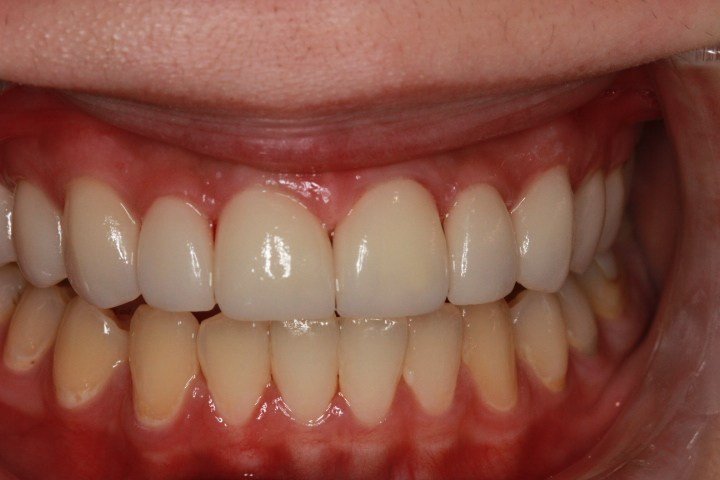
Before and after veneer treatment for visible spacing and an uneven appearance across previously restored front teeth.
This outcome is specific to this patient and does not predict the result another patient may experience.
Read how this smile was planned
The goal was not to create an overly white or perfectly uniform row, but to make the front teeth look smoother and more balanced within the wider smile.
Using the surrounding teeth as a guide, iCare refined the shapes and shade, then shared detailed photographs and feedback with the dental laboratory. The before-and-after images show how those decisions came together: the front teeth appear more cohesive while still retaining natural variation and individual character.
What happens during porcelain veneer treatment?
The iCare process includes these stages so design decisions can be checked before final veneers are made.
-
Consultation and records
You can explain what you want to change and preserve. Your dentist assesses the teeth, gums, restorations and bite, then discusses porcelain, composite and relevant alternatives.
At iCare, multi-angle photographs form part of the design assessment; other records may be recommended. This is also the stage to discuss scope, stages, limitations and cost before deciding whether to continue.
-
Trial smile or mock-up
A trial smile, or mock-up, shows proposed shapes and proportions in relation to your face. It lets you respond to length, outline and balance before final restorations are made.
It is a planning tool, not a promise of the exact final colour, translucency or result. It makes feedback specific before treatment advances.
-
Preparation and temporary veneers
Do teeth always need to be “shaved”? There is no universal preparation amount. Some designs require very little reduction; others need controlled preparation to create room, avoid excess bulk, manage the starting position or colour, or replace restorative material.
Our aim is to achieve the planned aesthetic result while minimising tooth reduction and preserving as much natural enamel as possible.
When preparation is part of the plan, iCare provides temporary veneers. They protect prepared surfaces and let you experience the proposed length and shape while the ceramic is made. Their colour, translucency and finish differ from final porcelain.
-
Feedback and final ceramic creation
With the temporaries, you can comment on appearance, length, speech, comfort and bite. Your dentist assesses the feedback and sends updated photographs and instructions to the technician.
The technician then creates the ceramic to the updated direction for colour, layers, translucency and form.
-
Fitting and review
At fitting, the temporaries are removed and the final veneers are assessed before bonding. Your dentist checks fit, appearance and bite. A review may include checks of the veneers, bite, gums and cleaning after you have used them normally.
There is no fixed appointment count for everyone. The selected teeth, starting condition, preparation, laboratory work and requested changes all affect the sequence.
What should you know about sensitivity, breakage and maintenance?
Veneers are long-term restorations, but they are not maintenance-free and do not last indefinitely.
Teeth can feel different while you adjust, and sensitivity may occur, particularly after enamel preparation. Veneers can chip, fracture, wear or come loose. Gum changes may expose a margin; surrounding teeth or restorations may change colour; and the tooth around a veneer can still decay. Clenching, grinding and the bite can also place extra force on veneers.
Contact your dentist if a veneer feels loose, the bite feels wrong, or sensitivity persists or worsens. Depending on the problem, the veneer may need polishing, repair, rebonding or replacement, and the underlying tooth may need treatment.
Daily care remains straightforward but important:
- brush twice a day with fluoride toothpaste;
- clean between the teeth every day using the method your dental team recommends;
- attend reviews at an interval suited to your oral health;
- avoid using the front teeth to open packaging or bite very hard objects; and
- use a sports mouthguard or night appliance if your dentist recommends one.
What affects the cost of veneers?
Cost depends on the material choice, the number and scope of teeth being treated, design complexity and clinical time, laboratory involvement, and whether dental-health or bite concerns should be addressed first.
After examination and the records needed to define a plan, you can receive an individual cost explanation before deciding. Ask which stages are included and whether future maintenance, repair or replacement would be separate.
Frequently asked questions
How many veneers might I need?
There is no standard number. One tooth may be the focus, or selected teeth may need to be considered together for colour and proportion. Treatment does not need to cover every visible tooth by default.
Can veneers be whitened later?
Whitening changes natural teeth, not the established colour of porcelain or composite. If it may be part of the plan, discuss timing before the veneer shade is selected.
Are veneers suitable if I clench or grind my teeth?
Clenching or grinding can increase load on restorations. Your dentist should assess the pattern, bite and existing wear, then discuss whether treatment, bite management or a protective appliance is appropriate.
Can veneers simply be removed later?
Veneers are bonded restorations, not removable covers. If enamel has been reduced, that change is irreversible and the tooth will usually continue to need an appropriate restoration.
What should I do if a veneer chips or comes loose?
Contact your dentist, avoid biting with that tooth and do not glue it back yourself. Keep any detached piece for assessment of repair, rebonding or replacement and the cause of the problem.
Start with a consultation, not a commitment
Bring the features you would like to change—and the parts of your smile you want to keep. An iCare consultation is the place to compare porcelain, composite and relevant alternatives, understand the likely preparation and maintenance, and decide whether the proposed design feels right for you.
iCare Family Dental is at Shop 3, 379 Victoria Avenue, Chatswood NSW 2067 (On the Archer Street side). The clinic is About a seven-minute walk from Chatswood Station. Two hours free parking at Chatswood Chase is available. Consultations are available in English, Mandarin and Cantonese.
For full arrival details, plan your visit.